Ages 8–13
Kids Brazilian Jiu-Jitsu in Saxonburg, PA
Confidence, focus, friendship, and the courage to stand tall — built one class at a time.
Our kids program is built on one belief: every child is more capable than they know. Jiu-jitsu is the tool we use to prove it to them. Through a structured, age-appropriate curriculum, your child learns real techniques against real (kid-sized) resistance — and discovers the version of themselves that doesn't back down, doesn't quit, and doesn't need to be the loudest person in the room to feel sure of who they are.
Parents come to us looking for self-defense. They stay because of what jiu-jitsu does for everything else — school, siblings, sleep, screen time, the way their child handles a hard day. Ages 8 to 13. Our mat is in Saxonburg, and families drive in from Butler, PA and the surrounding communities several nights a week.
Why It Works
More Than Self-Defense
Real Self-Defense
Age-appropriate techniques drawn from the same proven jiu-jitsu adults train. Your child learns to stay calm, control distance, escape a hold, and get back to their feet — without throwing a punch.
Focus & Discipline
Every class has a structure: warm-up, technique of the day, drilling, and a positional game. Kids practice listening, following steps in order, and staying with something hard until it clicks.
Confidence That Lasts
Confidence is built by doing hard things in front of others and surviving them. Tying a belt, asking a partner to drill, finishing a tough round — these reps add up far beyond the mat.
Anti-Bullying Toolkit
We teach the verbal de-escalation script first, the body language second, and the physical control skills last. The goal is a child who doesn't have to fight because they already know they could.
A Path to Earn
Stripes and belts at Empower are earned, not handed out. Kids track real progress — a position learned, a technique drilled, a sparring round handled well — and they feel it.
Screen-Free Fun
Class is fast, social, and physical. Most kids beg to come back. Parents tell us their child is calmer at home and sleeping better within a few weeks.
The Curriculum
What Your Child Will Learn
We run a structured, looping curriculum so every class connects to the last. Kids always know what they're working on and why it matters. Here is the full scope of what gets covered over a training cycle.
Position
Mount, Side Control, Back, Guard
Kids learn the major positions and which one they want to be in. We teach control before submissions — escape first, dominate second.
Escapes
Trap & Roll · Elbow Escape · Bridge
If something does happen, the first skill is getting out. Every cycle of the curriculum revisits the core escapes against bigger, stronger partners.
Takedowns
Level Change, Single Leg, Trips
Safe, controlled takedowns and — just as important — how to fall without getting hurt. Breakfalls are drilled every single week.
Submissions
Age-Appropriate Controls
Older kids learn the foundational submissions (rear naked choke, straight armlock, basic chokes from mount). Younger kids focus on control and positional dominance only.
Live Drilling
Positional Sparring
We don't throw kids into open rolls. They start from a specific position with a clear goal — escape, sweep, or maintain — against a partner their size.
Character
Respect & Mat Etiquette
Shake hands. Bow in. Help the new kid. Tap early, tap often. Win small, lose small. The same values get repeated every class until they're automatic.
Inside the Room
What a Class Looks Like
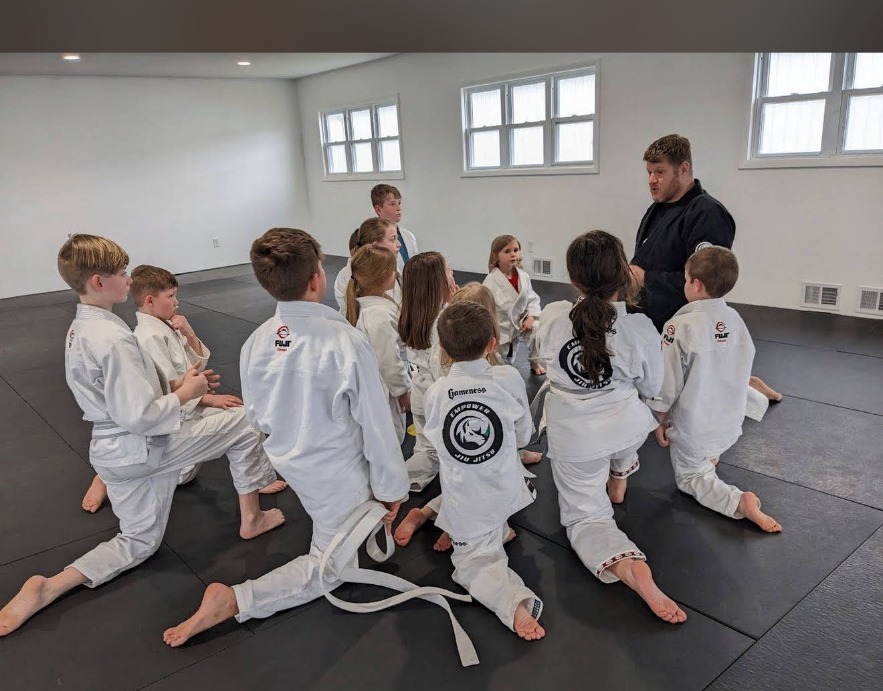
Fifty minutes, five clear stages. The same structure every time so kids know exactly what to expect and parents know exactly what they're paying for.
Bow In & Warm-Up
Structured warm-up with shrimping, bridging, breakfalls, and animal movements. Builds the body for jiu-jitsu and gets the wiggles out.
Technique of the Day
Coach demonstrates one or two techniques tied to the current curriculum block. Slow, broken down, with the why explained — not just the how.
Drilling With a Partner
Kids pair up and run the technique back and forth. Coaches walk the room, correcting one rep at a time. Every kid gets eyes on them every class.
Positional Games
Live, controlled rounds from a specific starting position. This is where the technique becomes a real skill — safely, against a resisting partner.
Cool Down & Talk
A short lesson on the character word of the week — courage, respect, perseverance — tied back to what happened in class. Bow out. Done.
For Parents
The Questions You're Actually Asking
Is it safe?
Yes. Brazilian jiu-jitsu is one of the safest contact arts a child can train because there is no striking. All sparring is positional, controlled, supervised, and matched by size and experience. Coaches are on the mat the entire class.
My child has never done a martial art. Will they keep up?
Absolutely. The class is built around new students. We pair beginners with patient partners, and the curriculum loops so missing the first technique doesn't put a child behind.
What should they wear to their first class?
Athletic clothing — shorts and a t-shirt are fine. We provide a loaner gi for the trial class. If they continue, we'll help you size them into their own.
How quickly will I see a change?
Most parents notice the first shift in 3–4 weeks — usually in focus, body language, or how their child handles frustration at home. The deeper changes (confidence, discipline) show up over months, not days.
What about bullying?
Jiu-jitsu gives kids a real, quiet kind of confidence. They stop performing toughness because they no longer need to prove anything. Most of our students never have to use a single physical technique — they just stop being a target.
What to Bring
- Athletic shorts and a t-shirt (or a gi if you have one)
- Water bottle
- A snack for after — they will be hungry
- An open mind and a willingness to fall down a few times
Your Journey Starts Here
Whether you are looking for a confidence boost for your child, a healthier and stronger you, or simply a place to belong, you are welcome at Empower. Come see what our community is all about.
Book a Free Class